The tears do not wait for a good day. They come while you are still doing the thing, still packing the bag, still walking out to the field with the seed against your chest. You are not weeping and then working. You are doing both at once, and no one has told you that this counts.
The psalm knows this. "Those who sow in tears will reap with songs of joy. Those who go out weeping, carrying seed to sow, will return with songs of joy, carrying sheaves with them" (Psalm 126:5-6).
Look at the timing. The sower is not waiting for the grief to lift before starting. The weeping and the sowing happen on the same trip, out to the same field. Faith here is not something you do once you feel better. It is what you carry with wet eyes into ground you cannot see producing anything.
Most of us were taught a cleaner order. First you heal, then you serve. First the tears stop, then the real living begins. We treat grief as a waiting room, a place to sit until the doctor calls you through to the part of life that matters.
The psalm will not have it. The one going out to sow is going out weeping, and the sowing still counts. Your prayers said through tears are still prayers. The meal you cooked while numb still fed someone. The showing up you did when every cell wanted to stay in bed was still showing up. God does not wait for your composure before he honours your obedience.
The weeping and the sowing happen on the same trip. Faith here is not what you do once you feel better.
This matters because the person in long grief often feels disqualified. You think the tears mean you are failing at faith, that a stronger believer would have moved on by now. So you add shame to sorrow and carry both. The sower in this psalm is not ashamed of the tears. They are simply the weather he works in.
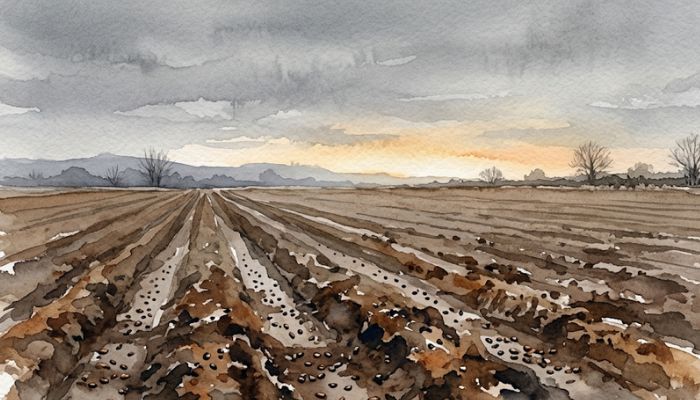
Sowing looks like loss before it looks like anything. You take the seed, the last of what you have, and you put it in the dark where you cannot watch it. For weeks it looks exactly like burying. Nothing rises. The field stays bare and brown and silent, and you have nothing to show for the thing you gave away.
This is why sowing in tears makes such sense to the grieving. You already know what it is to put something precious into the ground and walk away. You have done the burying. And the psalm dares to call that burying a planting.
The harvest is promised. "Will reap," the psalm says, not "might." But read what the promise leaves out. It gives no date. A whole season sits between the seed and the sheaves, a long stretch of ground that offers no evidence, and the psalm writes that silence into the promise rather than pretending it away.
So here is the honest word. The joy is coming, and it is not here yet, and both of those are true at once. You are allowed to trust the harvest and still feel the empty field. You do not have to manufacture the songs of joy today. Today you only have to carry the seed out, tears and all, and put it in the ground.
You went out weeping and you still went out. That is not a small thing.