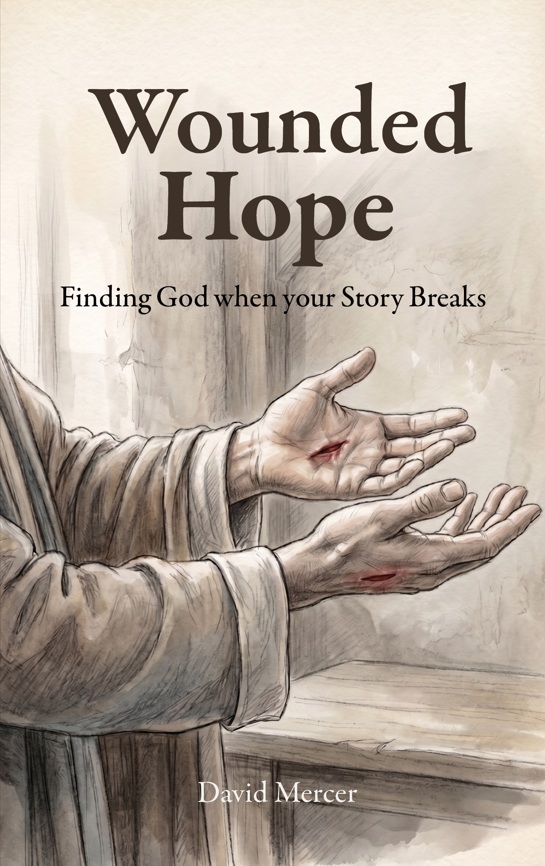
You knew how your story was supposed to go. You prayed. You raised them in the church. You served faithfully. Then the story broke.When prayers go unanswered, many of us fall into a cycle of frantic effort, deeper disappointment, and quiet numbness — searching for the broken clause in a contract God never actually signed.
Wounded Hope is not a recovery programme. It is a companion for sitting with God when the miracle does not arrive, written for the believer who is tired of being told to choose joy.
The goal is not to resurrect the unbroken believer you once were. That believer is not coming back. The goal is a durable, scar-tissue hope — rooted in a Christ who still bears his own marks.
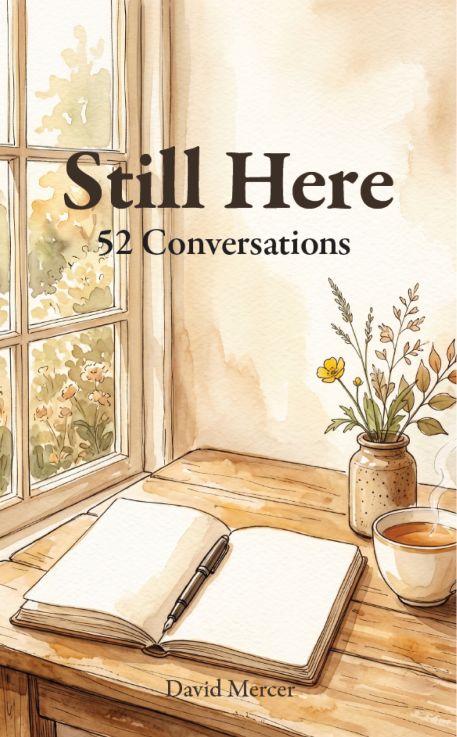
Some roads are long. Mental illness can be one of the longest. The recovery is rarely quick, rarely linear, and rarely the kind of story that ends with a neat resolution. It is lived in the ordinary middle, week after week, by people who are simply still here, and by the people who choose to sit with them.
Still Here is two books written for that road.One is for the person walking it. The other is for the person walking alongside. They were written to work together, and they were written to stand on their own. Between them, they hold both halves of the same quiet truth: the road is long, and no one has to walk it alone.
Most of the work happens in the quiet.
Not in the breakthrough moment, but on the long afternoons, in a room that smells the same as last week, with someone in a chair who is not getting better and not getting worse, and a chaplain who has come, again, to sit with them.This book is for the people who do that work. Chaplains, pastoral visitors, support workers, carers, and friends. Anyone walking alongside someone on the long road of mental illness.
It offers a theology equal to the work. It takes apart the belief that illness is a punishment. It lets go of the idea that healing has to be linear. It names the slow, sacred discipline of showing up, week after week, as a sign of the God who does not leave. And it offers practical, grounded guidance for how to be present when depression, anxiety, psychosis, or shame have changed the way a person hears God.
The book comes in two parts. The first builds the theology. The second walks, conversation by conversation, through its companion volume, the journal written for the resident.
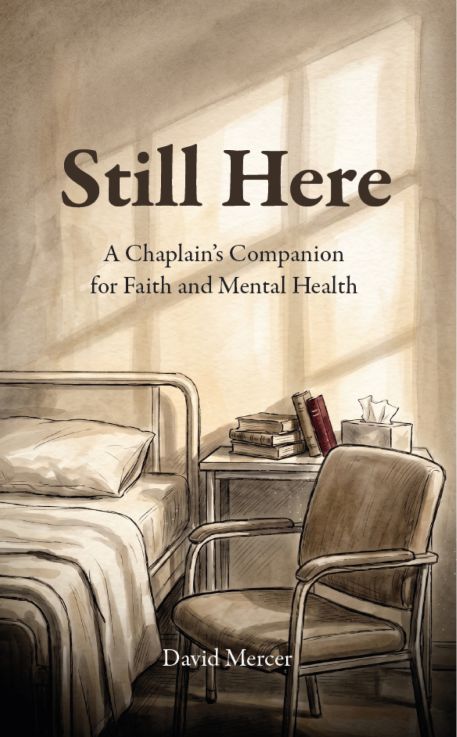
You are still here.
Some days that is the whole of it. You got through the night. You are in the chair, or the bed, or by the window.
The road has been long, and it is not over, and you are still here.This book is for you. Fifty-two short conversations, one for each week of a year. They don't ask you to be better than you are. They don't ask you to feel anything in particular. They meet you where you actually are — tired, or flat, or angry, or quietly hoping — and they sit with you there.
There is no right way to use it. Read it with a chaplain or a friend, or on your own. Start at the beginning or open it anywhere. Skip what doesn't fit, and come back to it later.The conversations are honest. They don't pretend the road is shorter than it is. But underneath everything, they keep returning to one quiet thing: you are not walking it alone.