This morning's lectionary reading is Psalm 124. Eight short verses, a song the pilgrims sang on the way up to Jerusalem.
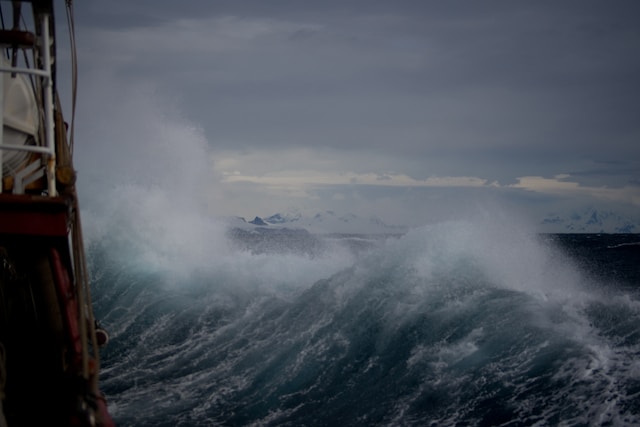
It opens by saying the same thing twice, as though the psalmist cannot get past it. "If the LORD had not been on our side, let Israel say; if the LORD had not been on our side when people attacked us, they would have swallowed us alive when their anger flared against us; the flood would have engulfed us, the torrent would have swept over us, the raging waters would have swept us away" (Psalm 124:1-5).
The whole psalm is a backward look. It is sung after the danger has passed, after the army has retreated and the floodwaters have gone down. The psalmist stands on dry ground, looks back at the water that almost took him, and the only sentence he can find is the one he has already said.
We have mostly forgotten this discipline: naming, after the fact, the rescues we missed at the time.
You have them. I have them. We almost never count them. The conversation that was supposed to happen and did not. The accident that almost was. The job you did not get that, three years later, you saw clearly was not the one for you. The relationship that ended and felt like a wound and now feels, in the long quiet of hindsight, like a deliverance. The version of yourself that was almost swept away in a particular year and somehow, by some grace you cannot fully explain, was not.
None of that shows up on the news. It does not announce itself. The torrent comes close and recedes and we move on, never quite catching that the ground we are standing on is a gift. The psalm is the practice of stopping to catch it.
"Praise be to the LORD, who has not let us be torn by their teeth. We have escaped like a bird from the fowler's snare; the snare has been broken, and we have escaped. Our help is in the name of the LORD, the Maker of heaven and earth" (Psalm 124:6-8).
Some of you reading this are not standing on dry ground. The flood has not gone down. The snare is still around your foot.
The psalm does not have an easy word for you, because it is a song for the other side rather than for the middle. You cannot honestly sing "if the LORD had not been on our side" while the wave is still over your head and you have no idea where the ground is. That song only comes from somewhere drier.
The people who wrote it were once where you are. They did not know, in their water, that they would later stand on dry ground and write it. They only knew the wave.
What the psalm offers you is quieter than rescue. It says that others have been here, and that the same God who feels distant on this particular Tuesday is, in the long memory of his people, the one who pulled them out.
The dry ground came anyway.
I cannot promise that your specific water will recede on a specific timeline. I have learned not to promise that. What the psalm gives is the shape of the story for the people of God. There has always been water, and again and again there has been ground on the other side, and the saints who reached it looked back and said the sentence the psalmist could not stop saying.
If the LORD had not been on our side.
Maybe today you cannot write the psalm. The water is too high. Maybe today it is enough to remember that the psalm exists, that other people wrote it after their own waters, and that the ground you reach will be yours to write from.