You have already decorated it in your mind. The house fuller than it is now. The morning you wake without the weight pressing on your chest. The call that finally comes, the offer, the break, the turn in the road you have been promised for years. The version of you that laughs freely again, once this is over. You keep that room clean and lit, and you tell yourself you will move in the day the waiting ends.
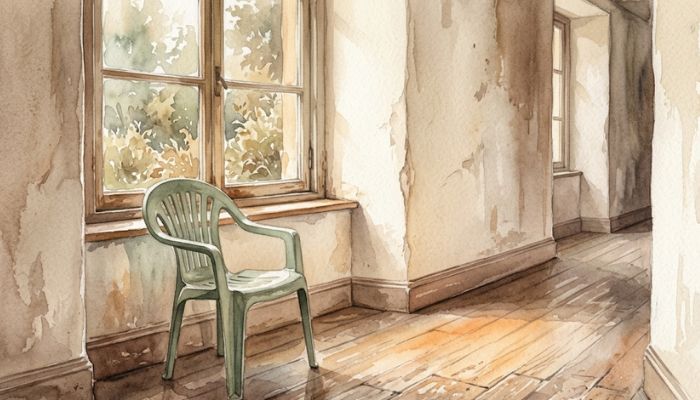
Meanwhile you sit in a plastic chair in a corridor, watching the door, waiting for your name to be called.
This is the quiet lie the long seasons tell. Not that the pain is unbearable, but that the pain is a lobby. A holding area between the life you had and the life that will resume once the trouble clears. So you put yourself on pause. You stop planting anything, because why plant in a place you are only passing through. You defer joy, friendship, rest, prayer, until the day the door finally opens.
Seneca, writing to a friend two thousand years ago, said the greatest waste of a short life is expectancy, the habit of hanging everything on tomorrow. He watched people postpone their living until conditions improved, and then die with the living undone. Their lives were not too hard. They were simply never in them.
You are not in transit. You are already home, in the only life you were given.
Ecclesiastes says something the waiting room cannot hear. "There is a time for everything, and a season for every activity under the heavens: a time to be born and a time to die, a time to plant and a time to uproot, a time to weep and a time to laugh, a time to mourn and a time to dance" (Ecclesiastes 3:1-4). The list never ranks the seasons. The time to weep is not a corridor leading to the time to dance. Both are named as life. Both count. The mourning is not the intermission before the real programme begins. It is the programme.
That is a hard thing to receive when the season is a trench. When the thing you are waiting for still has not come, and shows no sign of coming. When the depression has not lifted. It feels almost cruel to say that this, too, is your one life passing, that these grey days are not being refunded to you later. The alternative is worse. The alternative is to lose the years to a resumption that may never arrive on your timetable, and to reach the far side of the pain having missed everything in between.
So you learn to inhabit the trench. Not to enjoy it. Not to pretend it is a garden. To be present in it, honestly, the way a person can stand at a graveside or sit at a bedside and find, oddly, that even there the light still comes through the window and the tea is warm and a friend's hand is real. You let yourself be loved in the waiting. You keep the small appointments. You notice the one good thing the day held, and you let it be true even though the large thing is still broken.
The One who set the times did not abandon the weeping season to run the world from somewhere sunnier. He is in the trench with you. Not standing at the far end holding the door open. Beside you, now, in the plastic chair.
The waiting room was never a waiting room. The door you are watching does not lead to your life. You are already through it.