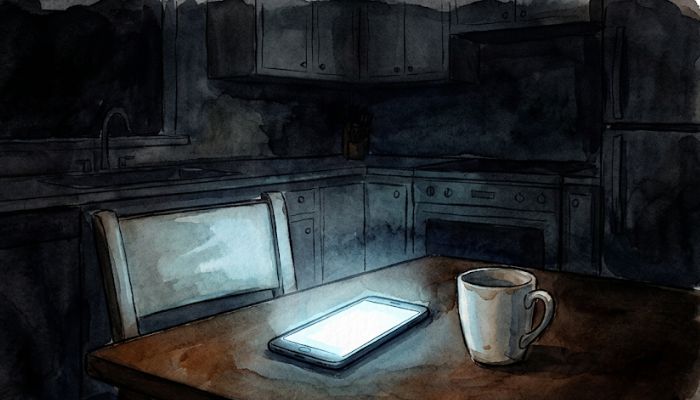
It is eleven o'clock and the house is quiet.
You are drained in the particular way that comes from being the one everyone needs. The work needed you all day. The family needed attending to. Your elderly parent needed the calls and the coordination and the appointments nobody else was going to make. The day asked more than you had, the way it has been doing for a long time now. And now, in the silence, you feel the ache of wanting someone to know how tired you are.
Calling a friend at this hour feels impossible. Explaining all of it feels impossible. So you reach for your phone instead.
The chatbot is right there. It never judges and never gets tired and responds in two seconds with something fluent and kind. You type out your exhaustion, it hands back a paragraph of validation, and for a moment the ache eases.
The chatbot is relational sugar.
It takes no effort to digest and gives a fast sweet spike of relief. And like sugar, it cannot do the one thing you need. Sugar does not rebuild a torn muscle or sustain a body across a long journey. You close the screen and the room is exactly as empty as before.
The interaction tasted like empathy. It left no nourishment behind.
Relational protein is heavy. It takes time and friction to break down, it is the only thing that rebuilds tissue, and it is costly in ways the sugar never is. It has weight because someone is spending themselves on you.
When a friend sits in your living room at 11pm, they are giving up sleep they cannot get back, bandwidth they did not have to spare, comfort they could have kept. The algorithm sacrifices nothing when it talks to you. It has infinite time and no stake in your survival. A friend has finite time and chose to spend some of it on you, and that cost is the proof that the love is real.
The protein is also in the awkwardness. Sugar goes down easy; protein has to be chewed. A real friend steps into the heavy atmosphere around a suffering person and stays there, choosing to feel the secondhand weight of your exhaustion rather than reaching for a cliché to get out of the room.
The machine cannot value you, because it cannot lose anything. When a person gives up their peace to sit with you, they are proving your soul is worth a sacrifice.
That is the hunger underneath the exhaustion of being the one everyone relies on. The fear that you are only a function, a logistical utility, valued for what you hold up. Sugar cannot touch that fear. Only the costly nearness of another person, voluntarily spent on you, can answer it.
Limiting the digital confessional is a discipline worth practising. Fasting from the easy sanctuary means tolerating the ache of the empty room for a while instead of numbing it with the quick spike.
That ache is hunger for the real thing. Keep filling it with sugar and you will never get hungry enough to do the hard vulnerable work of reaching for a person. The ache is what drives you to risk the late call, the awkward conversation, the invitation that lets an actual human being into your actual life.
Stay hungry for the real thing, so you do not settle for the counterfeit. The wounds you risk in a real community are the exact places where real love finally arrives.