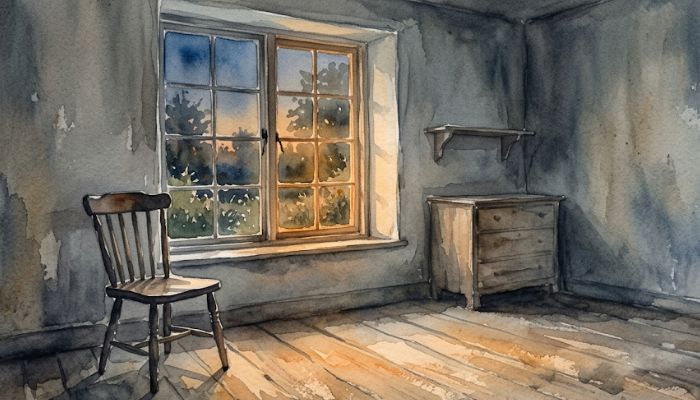
You have prayed the same thing so many times that you have stopped listening to yourself say it. The words come out worn. You know the shape of them before they leave, and you know the silence that follows, because you have been in this room before, saying this, and the ceiling has not moved.
Something has happened to your praying. Not that you doubt God exists. You have simply stopped expecting to be heard by him.
David knew that room.
"Hear me, Lord, my plea is just; listen to my cry. Hear my prayer, it does not rise from deceitful lips. Let my vindication come from you; may your eyes see what is right." (Psalm 17:1-2)
Three requests in two verses, and all of them are the same request. Hear me. Listen. Hear my prayer. A man does not say it that many times if he thinks it has already happened. He says it that many times because he has been talking into what feels like an empty room, and he keeps talking anyway. The repetition is desperation with nowhere else to put itself.
He never asks for the situation to change. No plea for enemies scattered, no request for health or circumstances rearranged. He asks to be heard. That is the whole of it. Before rescue, before relief, before anything is fixed, he wants to know the words landed somewhere.
The thing that breaks a person is rarely the pain itself. It is the suspicion that the pain is going unwitnessed.
That is what the long silence does to you. The unanswered request is not what wears you down. It is the growing sense that no one is on the other end of it, that you have been talking to the air for months, and that everything you carried in there you carried back out.
Someone will call David's persistence a lesson in faith. Maybe. But a man saying "hear me" three times is not demonstrating anything, and he is not performing endurance for an audience. He is a person who cannot get an answer and cannot stop asking.
That is closer to where you actually live than the tidy version.
And here is what I will not do. I will not tell you that the silence is God's kindness in disguise, or that he is doing something you cannot see yet, or that the answer is coming next week. You have heard all of that. Some of it may even be true. But none of it touches the specific ache of praying into nothing, and offering it now would be a way of hurrying you out of a room you are still standing in.
David does not get an answer in these two verses. He asks. That is all that happens.
What holds in Psalm 17 is not that David felt heard. Nothing in the text says he did. What holds is that he kept addressing someone. He did not turn and speak to the wall. He did not decide, after the fourth or fifth silence, that the room was empty and he might as well stop. He said "Lord" and then he said it again.
You are doing that. Maybe not well, maybe not with anything left in it, maybe with a flatness that embarrasses you when you hear it. But the words are still going somewhere, and they are still going to him.
The prayer that comes out tired is still a prayer.
When the answer comes, I cannot say. I do not know. What I can tell you is that these two verses made it into the book. A man's unanswered plea, his cry that got no visible response, the raw sound of him asking to be heard, and it was written down and kept and handed forward for three thousand years. Someone thought it was worth keeping.
Your prayer is not disappearing. It is going somewhere, even on the days the room stays quiet and nothing in you believes it.
And you said it again today. After all this time, you still said it.