You saw them before they saw you. That is its own kind of mercy and its own kind of cruelty, the half a moment you got to simply look at your children before anything else happened.
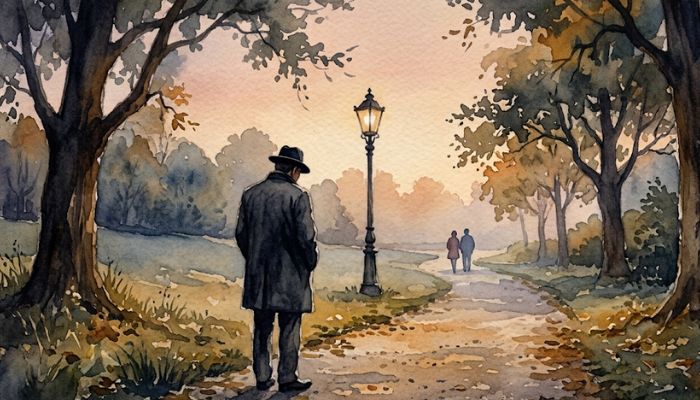
Then their eyes found yours. And what came next you have replayed so many times the edges have worn smooth. They turned back toward him. They kept walking. And you stood on the pavement holding the whole weight of it alone.
You will not waste your strength deciding what they meant by it. They are children. Children carry what the adults around them hand them, and they did not ask to be handed any of this. The point is not their fault. The point is what it did to you.
Because this is the child whose whole weight once fit against your chest, who you carried down a dark hallway at three in the morning, certain past all certainty that they were yours. You can still feel it, the exact heft of them, the warm breath against your neck. And you stood on a street corner watching that same child walk away, and something in you went down without a sound.
The man beside them walked easy. That is the detail that lodges deepest. The ease of him, the unbothered set of his shoulders, a man comfortable in a life he did not build. You do not even register to him as a rival. To him you are a man who used to matter, thinning into the background of a street.
You went home and there was no one to tell. What would you have called it. No word for it at a dinner table, no card, no casserole left on the step. No one lights a candle for a father who is still breathing and has been quietly buried in broad daylight.
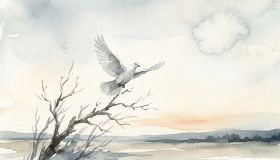
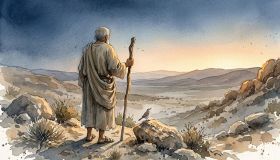
Psalm 55 knows the precise shape of this. Most people who reach for that psalm reach for the wish to fly away, the dove's wings, the longing for a quiet desert. But David does not stop there, and the part that fits your pavement is the part that comes after, when he stops circling the pain and names exactly where it came from.
"If an enemy were insulting me, I could endure it; if a foe were rising against me, I could hide. But it is you, a man like myself, my companion, my close friend, with whom I once enjoyed sweet fellowship at the house of God." (Psalm 55:12-14, NIV).
An enemy he could have stood. A stranger on a street corner you could have stood. What undoes a person is the wound coming from inside the circle of trust, from the ones who once walked beside you, who shared your table, who knew your voice in the dark. The closeness is the whole reason it cuts the way it does. You are not in pain because some stranger ignored you. You are in pain because the people you would walk through fire for kept walking the other way.
The deepest wounds are never dealt by strangers. They come from inside the love, where the guard was down.
David did not dress this up before he prayed it. He named the betrayal plainly, with the ache still raw on it, and brought it to God exactly as it was. God did not send it back for revision. Whatever you are holding tonight, you are allowed to hold it out the same way, without first making it smaller or more forgivable than it feels.
The scene comes back on its own schedule, never yours. It waits for the quiet stretch of the afternoon, the red light on the drive home, the sight of some other child falling into step beside a father who is not you. And it arrives whole, every time.
You are still their father. The pavement did not have the authority to unmake that, however much it felt like it could. No man walking easy beside them inherits what you are to them. That is not a thing that transfers.
And the story is not over, because the people in it are still alive. A street corner is not a verdict. Children grow, and seasons turn, and the door between you is not the kind that locks from only one side. You cannot force it open from where you stand tonight. But you do not have to. You only have to keep it from closing on your end, and leave the light on.
So you stand at the window after the house has gone dark, holding the remembered weight of a child against your chest. And out past the glass, faint but real, the thing you cannot reach yet and are not asked to reach yet: a way back that has not been sealed, waiting on a time that is not this one.
You are still here. You left the light on. That is not a small thing.