A doctor told me once, almost in passing, that the skin does not grow back the same.
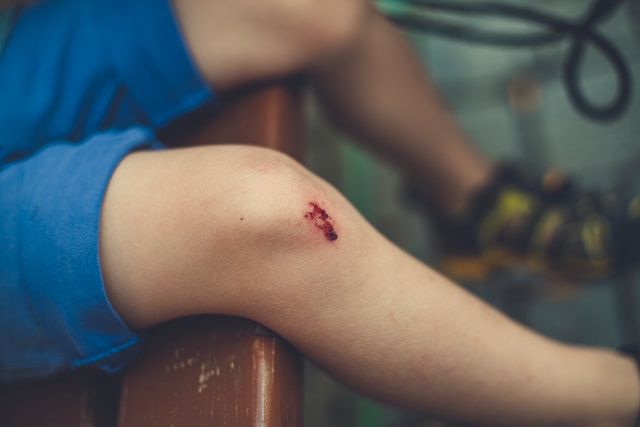
He had been describing how the body heals after a serious cut, and I asked him what he meant. When the body knits a deep wound, he said, it does not replace what was there. It produces new tissue, collagen-rich, slightly different in colour, tougher in some places and more sensitive to weather in others. The body recognises it as its own. It is also, in some real way, not the original. It is scar tissue.
It does the job. By every functional measure it is the skin of the place that was wounded, and it is also a record. The body has not forgotten what happened.
I have come back to that conversation many times, because it describes what happens to Christian faith on the other side of a wound that does not, in this life, close.
Most of us came to faith with a particular kind of hope. Confident and unworn. It felt solid because it had not yet been asked to carry anything heavy. Original tissue, unmarked, doing its quiet work without drawing attention to itself.
Then something happened. The child walked away. The body failed. The church wounded you. The marriage ended. The prayer went unanswered for so long that the asking itself began to feel absurd. The wound reached the original tissue, and the original tissue did not survive.
Christian frameworks struggle here. One of them says the wound will close and the faith you had before will be restored, if only you pray correctly and wait long enough. Another says push through and choose joy, and the feeling will follow the decision. The doctor described something else. The original tissue is gone and it is not coming back, and what forms in its place is recognisable as faith, continuous with what was there before, and altered. Marked by what it has been through in a way that will not fully disappear.
The faith that grows back is different, and in the ways that count it is more honest than what was there before.
The original tissue did not know what it could not carry. The new tissue does.
The original tissue had not been asked the hard questions. The new tissue has been asked them, and has not, despite everything, let go.
The theological word for this is hope, though not the sunlit kind of the unwounded years. Paul described it as the thing you cannot see. "Hope that is seen is no hope at all. Who hopes for what they already have? But if we hope for what we do not yet have, we wait for it patiently" (Romans 8:24-25). A low-grade trust that has stopped requiring felt confirmation. A stubborn refusal to let go of God on the days when God seems furthest away. The New Testament has been calling this hope all along, and what it means by the word is the staying.
Scar tissue is the evidence that the wound was survived. It carries, permanently, the shape of what the old tissue could not endure. And it is, in its own quiet way, doing the job.
The skin does not grow back the same. Neither do we. That is the shape of a life that has been through something real and has, by grace, kept going without fanfare.
The road is long. The new tissue is forming. You may not, on most days, be able to feel it.
The forming is happening anyway.