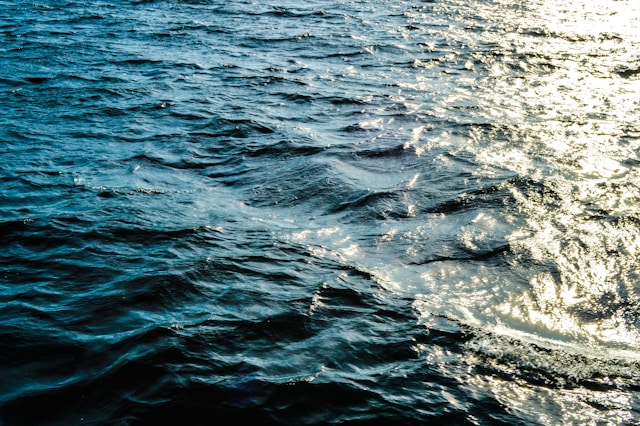
You have been waiting, somewhere underneath, for the water to recede.
You have not always known that is what you were waiting for. It shows up in smaller forms. The decision to start living again after the anxiety eases. The plan to invest in friendship once the depression lifts. The half-promise to return to church after the wound heals. The quiet hope that real life will begin when the chaos is over.
You have been standing at the edge of the flood, looking for dry land, treating the water as a temporary inconvenience between you and the life you are supposed to be living.
Psalm 24 says something about that which is easy to miss. "The earth is the LORD's, and everything in it, the world, and all who live in it; for he founded it on the seas and established it on the waters" (Psalm 24:1-2).
The Lord did not build the earth somewhere far from the sea, and he did not wait for the waters to drain before laying the foundations. In the cosmology of the psalm, the earth, all the ground we walk on, is built directly on top of the deep. The seas are still there. They are still underneath. The foundation of everything stable was laid, by deliberate design, on top of the chaos.
In the ancient imagination the sea was more than water. Tehom, the Hebrew word for the deep, carried the sense of primal chaos. It appears in the second verse of the canon. "Now the earth was formless and empty, darkness was over the surface of the deep, and the Spirit of God was hovering over the waters" (Genesis 1:2).
The deep is what God hovered over at creation, what he spoke into, the raw material out of which order came. Genesis is notably calm about it. The deep is not a monster to be defeated, just unformed water waiting to be shaped.
And it was never removed. Psalm 24:2 says so quietly. The earth is founded on the seas. The chaos that existed at creation is still there, underneath the structures God built on top of it. Dry land is not a victory in the sense that the deep no longer exists. Dry land is a gift laid over it.
The chaos was not destroyed. The chaos was made into a foundation.
That changes the question. We have been asking when the flood will finally go away, and in this life it mostly will not. The depression that has been with you fifteen years. The anxiety that runs in your family. The grief you have learned to live with. The body that does not cooperate. The inner weather that has been your weather for as long as you can remember. None of that is likely to be drained out of your life.
The psalm asks a different question. What is the earth built on?
The answer is the deep, and the answer is good news, because the ground you have been hoping for is not on the far side of the flood. It has always been built on the flood. The Lord who is doing the building has known about the deep from the beginning. He has not been waiting for your water to subside before laying foundations. He has been laying them all along, in territory you assumed disqualified you from solid ground.
Stability, in actual life, does not feel the way we expected. It is less like dry land and more like standing on something firm while feeling, just underneath, the movement of water that has not gone anywhere. The current is still there and you can sense it under your feet. Some days the awareness of it sits closer to the surface, and the old fear comes back: that the ground will give way, that you will slip in, that the deep will finally swallow you.
The ground holds.
It holds not because the deep is absent but because of who built it. The architect of your stability is the same God who hovered over the deep at creation and was not intimidated by it. He has not been intimidated by yours either.
The morning coffee is the ground. The walk to the bus stop. The phone call to the friend. The slow honest prayer. The decision to stay in the marriage one more day. Small acts of standing on founded ground, none of which require the deep to be gone. All of which require only that you put your weight on what the Lord has built.
You have been doing this for longer than you realise. The deep has not swallowed you and the ground has held, and the architecture that kept you alive through years of internal weather you could not control was never your achievement. It was the long faithful work of a God who founds his earth on seas.
The dry land you have been waiting for is not coming. The ground he built for you was always meant to sit directly on the deep you have been trying to escape.