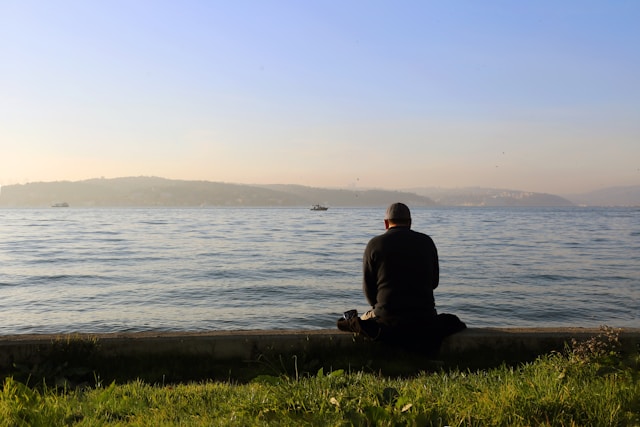
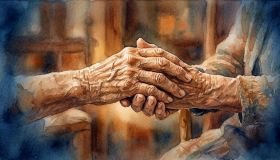
You still believe in Jesus. You are just not sure you can walk through another set of those doors.
I hear this often from wounded believers, and almost never from a pulpit. The assumption in most Christian communities is that the road back from a hard season leads, eventually, to a building. That healing looks like reintegration. That the faithful thing is to find a church and begin again.
For some of you, that road is genuinely difficult right now. Your faith is not gone. The institution that was meant to hold you became the thing that broke you, and your body remembers.
You know the feeling from the inside. Months after leaving the church that turned on you, you tried to walk into a new building. You made it as far as the back row before the worship band started, and you were out in the car park before the chorus finished. You did not reason your way to that. Your body was telling you something your mind had not finished processing. The room was not safe. Not yet.
The New Testament takes the gathered community of believers seriously, close to the centre of what it means to follow Jesus together. Hebrews is direct about it: "not giving up meeting together, as some are in the habit of doing, but encouraging one another" (Hebrews 10:25). Paul's letters are almost all addressed to communities rather than to isolated individuals. The church, for all its capacity to wound, is also the body of Christ.
So none of this is an argument against the church, or permission to walk away for good and call the leaving a kind of healing. For some people, in some seasons, the road back is longer than the church usually allows for. And the shame that gets added to an already wounded person, the quiet questions about why you are not in church yet, why you are still carrying this after all this time, tends to deepen the wound rather than help it close.
If the doors really are closed to you for the moment, if your body is still processing what happened in a room that looks like the one you are being urged to enter, the work of this season will be slower and quieter than the people around you expect.
It may look like two friends and a passage of Scripture on a Wednesday evening. It may look like sitting in the back row of a new church and leaving before the sermon, because that was all you had to give that week. Months of rebuilding a trust that was broken, before you can offer that trust to anyone again.
That is the honest road, even where it is not yet the destination.
The hope is return. Not necessarily to the church that wounded you, which may never be possible, and that is allowed.
Return to the gathered community of believers in some form, at some pace, as the new tissue forms and the road becomes passable again.
The church is thinner without people who have been through something real, and that stays true whether or not you can walk back in this year.
The doors may be closed right now. They will not be closed forever.
The road is long. You are not walking it alone.