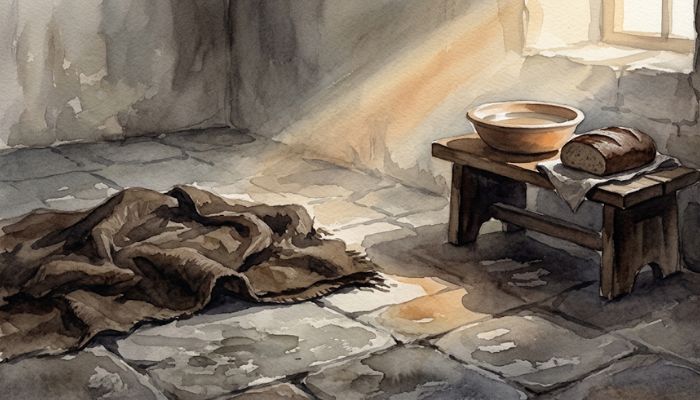
Seven days on the floor of the palace. He lay in sackcloth and would not eat. The elders of the household came in shifts to lift him up, and every time they went away with their hands empty.
"David pleaded with God for the child. He fasted and spent the nights lying in sackcloth on the ground. The elders of his household stood beside him to get him up from the ground, but he refused, and he would not eat any food with them." (2 Samuel 12:16-17)
Anyone who has kept vigil over a sick child knows that floor. Sometimes the floor is a plastic chair in a ward corridor at four in the morning. You stop washing. You stop answering messages. Someone leaves a sandwich beside you and it goes stale in the bag, because eating feels like a small betrayal.
David had no promise to stand on. When they asked him later what he had been thinking all week, he told them. "Who knows? The LORD may be gracious to me and let the child live." (2 Samuel 12:22) Two words carried that whole week. Who knows.
Then the child died.
The servants could not bring themselves to tell him. They whispered instead. They were afraid of what the news would do to a man already lying on the ground. He heard them and asked outright.
"Then David got up from the ground. After he had washed, put on lotions and changed his clothes, he went into the house of the LORD and worshiped. Then he went to his own house, and at his request they served him food, and he ate." (2 Samuel 12:20)
The account tells us nothing about how he felt while he did any of it. It does not say the worship moved him. It does not say the food had taste. It records what his hands did and stays quiet about the rest.
Washing his face changed nothing about the size of the loss. It changed only what he did with his hands.
Grief that can still do something looks like pleading. Grief that can do nothing has to find another shape, and the shape it finds is usually ordinary. Clean clothes and a meal at the usual hour. Sunday morning in your usual seat, while almost nothing happens inside you. From the outside, people read that as recovery. Sometimes they read it as proof you did not love the child much. They are watching the hands and calling it the heart.
His answer, when they asked, was short. "But now that he is dead, why should I go on fasting? Can I bring him back again? I will go to him, but he will not return to me." (2 Samuel 12:23) He puts the going first. What he cannot change comes second, and it no longer steers him.
Some of you are grieving a child who is still alive. You see him still. He sits across the table and answers in single words. She will not talk to you, and she will not even eat at the same table. You get an hour, and you spend most of it looking at a face that settled something about you long before it sat down.
You go home afterwards and you cannot decide what to call it. A visit sounds too warm. A loss sounds too final, because he is alive and well and he had lunch with you on Saturday.
Nobody will ever come and tell you it is finished. So you get up without the news that made David's getting up reasonable. You wash your face. You go to work. You keep the phone charged. You answer the short reply as though it were a long one, and you do the whole thing again next round, with nobody giving you permission.
That is harder than what David did.
The going David chose was never a way of getting the boy back. He set a direction and he kept walking it, whether or not the child stood at the end of it. You can hold that for years without it hollowing you out. Keep turning up at the same table, warm, without demanding warmth back. Then live a real life in the weeks between, instead of living from meeting to meeting.
The man who had spent a week on the floor goes to Bathsheba and comforts her. He was not finished grieving. He went anyway, and he brought her whatever he had left.
The chapter says nothing about him feeling better. It does not detail his restless nights or measure what he carried into the years that followed. He got up, and the account moves forward without asking how he felt.
You washed your face this morning. You listened to the Moka pot on the stove and poured your black coffee. The day started anyway.