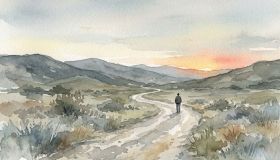
The world is quietly walking away from hustle culture, and the church has not yet noticed.
People are stepping back from the grind. Setting boundaries. Refusing the late emails. Choosing smaller, quieter lives over the climb. The culture has started to suspect, for the first time in a long while, that the relentless pace was not the good life it had been advertised as.
Meanwhile, you are still going.
The calendar is still full. The sermons are still being written on Saturday nights. The meetings start at seven and end after ten. The phone is still on the bedside table because the call could come, and you, faithful as you are, would never not answer it. You built a ministry that runs at the speed of your willingness, and your willingness has been near total for years.
And somewhere underneath, quieter than you have let it be, a question has started to surface. Was this the shape it was supposed to take?
The instinct of the faithful leader is to distrust any inner voice that suggests easing up. The Enemy whispers laziness. Souls are at stake. The labourers are few. All of that is true, and none of it settles whether the pace at which you have been doing the Lord's work is the Lord's pace.
Jesus did not move at the speed of his ministry's demands. The crowds wanted more and the disciples wanted him to capitalise on the momentum. He withdrew instead. "Very early in the morning, while it was still dark, Jesus got up, left the house and went off to a solitary place, where he prayed" (Mark 1:35).
Peter tracked him down with the obvious message: everyone is looking for you (Mark 1:36-37). Jesus did not go back. "Let us go somewhere else, to the nearby villages, so I can preach there also. That is why I have come" (Mark 1:38). He left that village with people in it who still wanted him, because the rhythm of his own life mattered more than the satisfaction of every demand on it.
The Saviour of the world walked past people who needed saving, because his own walking with the Father required it. If Jesus could walk past, you can.
The hustle was never the gospel. It was something the modern church picked up from the productivity culture of its surrounding economy and then baptised. The metrics. The growth charts. The conferences on multiplication. The unspoken assumption that a leader's worth is a function of what the leader produces. None of it is in the New Testament. It is in the air you have been breathing, and it has felt holy because you were doing it for the Lord, and the Lord did not ask for it.
He asked you to remain. "Remain in me, as I also remain in you. No branch can bear fruit by itself; it must remain in the vine" (John 15:4). The Greek is meinate: stay, dwell, remain. Not a verb of motion but a verb of presence. The fruit comes from staying. The pace of the kingdom is the pace of a vine, slow and hidden and deeply rooted.
You may be reading this in an empty office on a Saturday night. You may be reading it between meetings, with three more before the day ends. You may be reading it knowing that something inside you has been wearing down for years.
You have been calling that wearing-down faithfulness.
It is allowed to slow. The ministry will not collapse if you sleep eight hours, and the church will not fail if you take a Sabbath you actually honour. The people you serve do not need a leader running on three hours and caffeine and an exhaustion he has been calling devotion. They need a leader whose own soul has been tended. Fruit from a tended soul tastes different from fruit borne out of depletion, and the people you serve can taste the difference even when you cannot.
The cultural moment is asking, in its own secular way, a question the church should have been asking all along. What is a life for? What is the soul for, if it has been spent in service that stopped being service somewhere along the way and started being performance?
The slowing you are afraid to permit is where the deeper ministry begins.