Peter Parker cannot tell the people he loves who he is. The mask that lets him protect them is the same thing that keeps them from knowing him. He is late, unreliable, a disappointment to their faces, and out saving their lives where they cannot see. He is most present exactly where he looks most absent.
You know something about that gap.
You did not push harder. You did not appear in the places where you knew there would be pushback. The last time you reached, the door closed harder, and you understood that pressing again would only give them one more reason to be sure they were right to leave. So now you wait. And to everyone watching, and maybe to your own child, the waiting looks like absence. It looks like a father who stopped trying. Nobody sees the nights you drafted the message and deleted it. Nobody sees the restraint it takes to not show up, to not send the letter, to not defend yourself to the one person you most want to understand. They see the quiet. They read it as not caring.
The quiet is the caring. That is the part no one gets to witness.
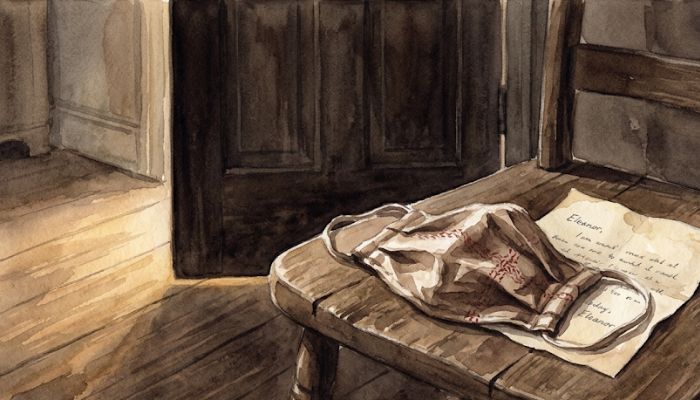
Love sometimes looks exactly like the thing it is trying to prevent. You hold back your presence because you know your presence would start a war, and a war would cost your child something you are not willing to make them pay. So you disappear on purpose. You wear the mask of the absent parent, and you wear it for them, and it is the loneliest costume there is.
The world has one script for this. Fight for your child. Show up anyway. Keep knocking. And sometimes that is right. But sometimes knocking is only noise to someone who has asked for silence, and the loving thing, the harder thing, is to stand back and let the door stay shut without letting your heart shut with it.
That kind of love has no witnesses. It earns no credit. It cannot even explain itself, because the explanation would require the very contact you are choosing not to force.
You are not the parent who left. You are the parent who loved enough to wait where no one could see you doing it.
Hagar knew something about being sent away. She was in the desert because she had been pushed out of a home that no longer had room for her, carrying a future she did not choose, entirely alone. And in that place, the place of being unwanted and unseen, she met God and gave him a name no one else in Scripture gives him. "She gave this name to the Lord who spoke to her: 'You are the God who sees me,' for she said, 'I have now seen the One who sees me'" (Genesis 16:13).
She did not say the God who fixes this. She did not say the God who brings my child running back. She said the God who sees me. That was the mercy. Not resolution. Recognition.
Wilderness makes you doubt your own love, because nobody is reflecting it back to you. If your child cannot see it, and your family reads it as failure, and even you begin some nights to wonder whether standing back was just cowardice with a nicer name, then you are living without a single mirror. You start to forget your own face.
The hero in the mask has the same problem. Everyone has an opinion about the man they think he is, and not one of them is defending the man he actually is, because that man is invisible to them by design. He carries the whole weight of who he really is alone, and the city calls him a menace for it.
You need someone who sees the restraint for what it is. Who knows the difference between a parent who stopped caring and a parent who cared so much they went quiet. There is at least One who reads the silence correctly, who was himself pushed out and recognized by almost no one, and who does not mistake your waiting for indifference.
He sees the deleted messages. He sees the birthdays you marked alone. He knows that the distance you keep is not the absence of love but its most costly form.
Your child may never know what this waiting cost you. That grief is real, and I will not tell you it is small. But you are not invisible to everyone. The love you cannot deliver is not love that vanished. It is being held and witnessed by the God who found a cast-out woman in the desert and let her know she had been seen the whole time.
You are still loving them. Even from behind the mask no one asked you to explain. That is not nothing.