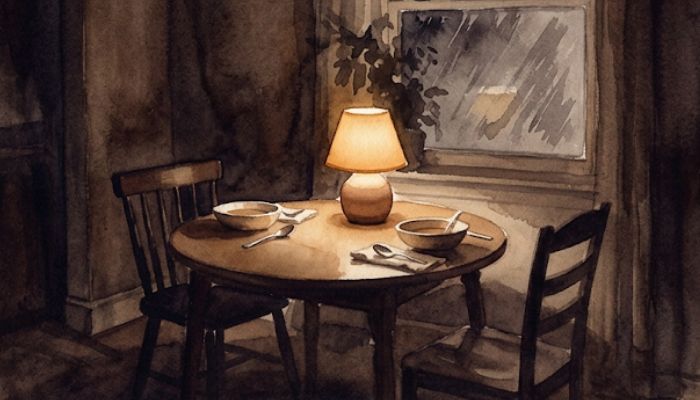
He sits across from his wife at dinner and passes the rice and answers her questions about his day, and she has no idea that the money is gone. The down payment. The wedding fund. The savings that took eleven years to build. It vanished in a fortnight, and he has decided she will never know, because the shame of her knowing feels worse than the loss itself.
This is happening right now, in thousands of apartments in Seoul.
Through the first half of 2026 the Korean market climbed and climbed and did not stop. The KOSPI more than doubled. Ordinary people, office workers and students and retirees, poured in what they had and what they borrowed, because staying out began to feel like the only foolish thing. Then in a matter of weeks it fell by roughly a quarter. Forced sales wiped out positions worth trillions of won. A thirty-nine-year-old man told a reporter he might have to postpone his wedding, because the deposit he had set aside was simply no longer there.
The numbers made the news. The men who cannot sleep did not.
When someone in your family dies, the neighbours come. They bring food, they sit with you, they say things that help and things that don't, and none of it fixes anything, but you are not alone in the room with it. When you are diagnosed with an illness, people pray, they check on you, they carry some of the weight without being asked.
Lose your savings, and the room stays empty.
A financial collapse is a real bereavement. Something you loved and trusted and built your future on is dead, and you are grieving it. But no one recognises this grief as grief. The culture files it under stupidity instead of sorrow. You were reckless, you were greedy, you should have known, and so you are not permitted to mourn. You are only permitted to be ashamed.
A financial collapse is a real bereavement, and no one comes to sit with you in it.
So the loss goes underground. You tell no one. You keep passing the rice. And the secret, not the money, becomes the thing that starts to crush you, because a shame you cannot speak grows heavier every day you carry it.
The instinct to hide is older than any market.
The very first thing shame ever made a person do was hide. Adam and Eve had done the one thing they were told not to do, and their first response was not to confess and not to run to God. They covered themselves with fig leaves and stepped back into the trees, because being seen had become unbearable. "I heard you in the garden, and I was afraid because I was naked; so I hid" (Genesis 3:10). That is the whole mechanism, laid down on the first pages. Something goes wrong, you feel exposed, you hide.
You are not doing something new when you keep the loss from your wife. You are doing the oldest thing there is.
God does something with a hiding man that shame never predicts. He does not stand at the edge of the garden and wait for Adam to come clean. He goes in after him. "Where are you?" (Genesis 3:9). The God who knows exactly where Adam is asks anyway, and the question is not a trap. It is the sound of someone coming to find you. He is not looking for a confession before he will approach. He is closing the distance the shame opened.
The God who already knows where you are still comes looking, and the looking is mercy.
Then comes the detail that undoes everything shame believes about God. Before he sends them out, before anything is resolved, "the Lord God made garments of skin for Adam and his wife and clothed them" (Genesis 3:21). Their fig leaves were not enough and they knew it. So God covers them himself. He does not tear off their pathetic covering to expose them further. He replaces it with something that will actually hold. The hiding man is not shamed into the open. He is clothed.
This is what the Lord does with shame. He covers it.
The man in the Psalms understood this. He did not wait until he was clean. "I waited patiently for the Lord; he turned to me and heard my cry" (Psalm 40:1). He cried out from the mud, and being heard is where the coming up began.
You do not have to tell everyone. You have to tell one person. Your wife. A brother. A pastor. One human being who will know that you are down there. When you finally say it out loud, you are not walking into a courtroom to be judged. You are walking toward the God who came into the garden asking where you were, not to expose you, but to cover you. The person you tell is a foretaste of that. Someone finally knows, and the sky does not fall, and you are still clothed.
The money may not come back. That is the hard truth, and pretending otherwise would be a lie. But the slow suffocation of carrying it alone can stop today, the moment someone else knows.
You lost the money. You did not lose your life, and you were never meant to bear this where no one can see you. You are still here, at the table, passing the rice, already found by a God who covers the ashamed instead of exposing them. That is the place from which a person is clothed and comes home.