You read the notice twice. The second time slower, in case the first reading had made a mistake.
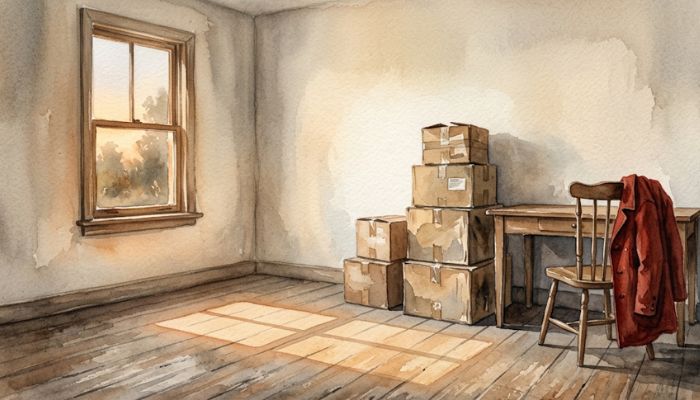
Then the arrangements start. The handover. The boxes. The new corridor that smells different, and a stairwell you keep getting wrong. Someone shakes your hand and says they are glad to have you, and you believe them, and it does not help.
Maybe a restructure moved you sideways into a role that reads on paper like the same seniority and does not feel like it. Maybe a rota change put you on a ward you never asked for. Maybe a transfer sent you to a branch an hour further out, with a smaller team and a longer commute. Or a church posted you, and you were told the appointment had been prayed over carefully, and you went where you were sent.
You can do the work. Most days you do it well. The trouble sits in the gap between where you thought you would be by now and where you have actually been put.
People read a move. They cannot help it. Some of them decide, quietly, that something must have happened. Others decide nothing at all and simply stop asking about you, which stings in a different way.
Then you start reading it too. You go back over the last two years looking for the thing you did. You reconstruct meetings. You wonder whether a sentence you said in March travelled somewhere it should not have gone.
A verdict forms in you about your worth and your usefulness, and nobody ever delivered it.
For some of you the move came from a church, and that carries a particular difficulty. Everyone expected you to receive it as the will of God. Saying it hurt would have sounded like rebellion against the call itself. So you did not say it, and the grief went underground, and it came out months later as tiredness.
Amos had not chosen Bethel. Somebody had sent him north, out of his own country, and the resident priest there wanted him gone.
"Then Amaziah said to Amos, 'Get out, you seer! Go back to the land of Judah. Earn your bread there and do your prophesying there. Don't prophesy anymore at Bethel, because this is the king's sanctuary and the temple of the kingdom.'" (Amos 7:12-13)
Amaziah reframes a calling as a livelihood. Earn your bread. He turns Amos into a man doing a job for money in the wrong town, and the accusation lands because some private part of Amos has probably been asking a version of it already.
Then Amaziah names the building. The king's sanctuary. He is defending the house, and in defending it he tells you whose house he thinks it is. A hard placement teaches you the same thing soon enough. You find out who owns the room you were sent into.
Amos answers him:
"Amos answered Amaziah, 'I was neither a prophet nor a prophet's son, but I was a shepherd, and I also took care of sycamore-fig trees. But the Lord took me from tending the flock and said to me, "Go, prophesy to my people Israel."'" (Amos 7:14-15)
He offers no defence of his record. Nothing about his message or his right to stand there. He tells the man where he came from. Sheep, and figs that had to be split by hand before they would ripen, out in the heat, work nobody in Bethel had heard of him doing.
When someone questions your placement, you will reach for your record and it will not be in your hand. What you have left is where you came from, and who moved you.
The word he uses is took. God took him out of one life and set him down in another. Nobody asked him first.
And Amaziah tells him to go home, to the exact ground he was taken out of. That door is shut. Whatever this new place costs you, the old life is not sitting there keeping your seat warm.
Amaziah does not repent. No one in the book turns to Amos at the end and tells him he was right to stay. He keeps speaking, and the speaking is all he gets.
Somebody will tell you, eventually, that the place you were sent is secretly the large place, and that in ten years you will look back and see it was the making of you. They might turn out to be right. It will not help you this year.
You were taken. Somebody moved you out of one life and into this one, and the moving was not an administrative accident, even though it arrived in an administrative letter.
You may not come to love this place. Some mornings you will manage only to be in it. The one who took you from the flock has not gone back on the taking.