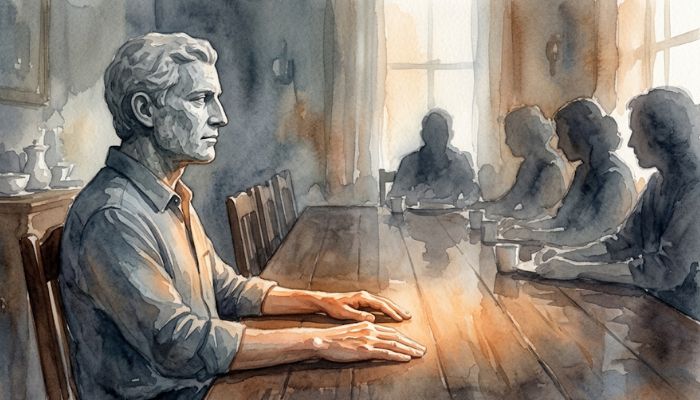
"So, what happened?"
Someone asks it kindly, halfway through the meeting, and every head at the table turns toward you. You give the answer you prepared in the car. It is true, and it takes four sentences. Then you stop, and the room waits for the fifth.
You could give it. The rest would explain a great deal. It would also mean telling the whole table about someone else's hardest months, and that someone is a person you still love and still hope for.
So you let the pause run. The chair nods slowly and moves to the next item. A week later a friend repeats your story back to you, in a version you never told.
Isaiah's servant stood in a harder room than yours. Men had pulled out his beard and spat in his face, and he still claimed God's help as his own:
"Because the Sovereign LORD helps me, I will not be disgraced. Therefore have I set my face like flint, and I know I will not be put to shame. He who vindicates me is near. Who then will bring charges against me? Let us face each other! Who is my accuser? Let him confront me!" (Isaiah 50:7-8)
He makes no speech in his own defence and lays out no evidence. He invites his accusers to face him, and he leaves the verdict with someone else.
A face set like flint belongs to someone who decided where to stop before the room filled. You say the true part you are free to say. Then you hold that line when the pressure comes. You refuse to buy back your good name with a story that is only half yours.
The meeting ends, but the talk carries on without you: over lunch, in a message you were never meant to see. Each new version tempts you to step in and set the record straight. You set your face once, in that room. After that you keep it set, every time a new version finds its way back to you.
Jesus kept silent before his accusers too. Peter was in the courtyard that night. Years later he called that silence trust:
"When they hurled their insults at him, he did not retaliate; when he suffered, he made no threats. Instead, he entrusted himself to him who judges justly." (1 Peter 2:23)
Your name is safe to hand over. God will hold it.
The flint faces the crowd, though, and it does not have to face everyone. You can tell the whole of it to one trusted person who will keep it. The silence in the room gets lighter once someone knows what it is carrying.
Isaiah names a person where you might expect an outcome: "He who vindicates me is near" (Isaiah 50:8).
The verdict may take years. A few people in that room may keep their guesses for the rest of their lives. The one who will speak for you has no distance to travel. He stands close enough to touch.
The talk will not outlast him either:
"It is the Sovereign LORD who helps me. Who will condemn me? They will all wear out like a garment; the moths will eat them up." (Isaiah 50:9)
Rumours need constant retelling to stay alive. His word about you will stand without anyone repeating it.
The verdict may be years away, but the one who will give it is standing beside you now.
Your silence is keeping a door open for someone you love. He sees you holding it, and he stands nearer to you than any of the questions.